A British Seasonal Pantry Calendar: What to Buy, Store and Cook Month by Month
The pantry cooks I admire most shop with the calendar rather than the aisle. They buy forced rhubarb when it is pink and brittle, tomatoes when the greenhouse is groaning, apples by the crate in October — then spend a few hours turning that surplus into something still worth opening in February.
What follows is a month-by-month guide to that rhythm: what to look for, how to keep it, and which jobs actually repay the effort. Seasons drift by a fortnight or so depending on where you live, so treat the months as markers rather than deadlines.
How to Use This Calendar
Most of the year falls into three moods: buying (eat it now), storing (keep it a while) and preserving (make it last). The calendar below moves through all three, but the technique barely changes — only the produce does.
A few general notes before you start. Buy in small quantities the first time you preserve something; a crate of plums is only a bargain if you will genuinely use them. Work in batches of two or three jars rather than one long marathon. And write the date on every label, because memory is unreliable by the time November comes round.
Winter: January and February
Late December and January bring Seville oranges — bitter, knobbly and useless for eating raw, which is precisely why they make the best marmalade. Buy a box, shred the peel soon after they arrive, and cook the lot in one session; it keeps for a year or more in a cool cupboard.
The vegetable rack is at its most dependable now. Parsnips and celeriac from the store, January King cabbage, cavolo nero, sprouts still on the stalk, leeks. Frost sweetens parsnips, so late-dug roots are worth waiting for. Purple sprouting broccoli turns up in late February, always in smaller quantities than you hoped.
Forced rhubarb from the Yorkshire sheds arrives in January. Poach it gently with orange zest and freeze the surplus in its own syrup. Meanwhile, check stored apples, squash and onions weekly and remove anything softening before it spoils the rest.
Spring: March to May
Wild garlic is the first real event of the year. Pick leaves before the white flowers open, in woodland that smells unmistakably of itself. Blitz them with toasted nuts, hard cheese and oil for a pesto that freezes well in ice cube trays, or chop them into butter and roll it into a log. The buds pickle beautifully and make a decent stand-in for capers.
British asparagus has a short, sharp season from late April. It is the one vegetable I rarely bother preserving — blanch the woody ends and freeze them for soup, but eat the spears fresh with butter and black pepper. Spring also brings nettles, spring greens, radishes and the first cut-and-come-again salad. If you keep hens and eggs are piling up, lemon curd and pickled eggs deal with a glut neatly.
Early Summer: June and July
Elderflower appears in late May and June, strawberries in June, gooseberries and broad beans shortly after. Make cordial with the flower heads, adding citric acid or lemon juice so it keeps, then freeze it in plastic bottles with a little headspace left for expansion. Elderflower also lifts an ordinary gooseberry jam into something worth giving away.
For strawberries, small batches set better than large ones: roughly 1kg of fruit to 750g of sugar, with the juice of a lemon. If you would rather freeze them, spread the hulled berries on a tray first, freeze until solid, then bag them — you will get loose berries instead of a solid block.
Broad beans and peas freeze well after two minutes in boiling water and a plunge into cold. Podded and bagged, they will keep for months.
Late Summer: August and September
This is the season that tests your shelf space: tomatoes, courgettes, runner beans, sweetcorn, blackberries, plums and damsons all arrive at once. Decide quickly what each glut is for, because a bowl of tomatoes left on the counter for three days is a bowl of wasted tomatoes.
- Freeze plain. Tray-freeze berries, blanch and bag beans, freeze tomato halves for winter sauces.
- Bottle or jam. High-acid fruit — plums, blackberries, damsons — is the safest and easiest place to start.
- Chutney and pickle. The best home for courgettes, marrow and green tomatoes.
- Dry. Herbs, apple rings and halved tomatoes in a low oven.
- Give away. A box on the doorstep or a swap with a neighbour costs nothing.
Slow-roasting tomatoes under oil is worth doing, but keep the jar in the fridge and eat it within a few days. Garlic and herbs sitting under oil at room temperature are not safe to store.
Autumn: October to December
Apples come in by the crate. Choose late keepers where you can — Ashmead's Kernel, Egremont Russet, Bramley for cooking — and store them in a cool, dark, frost-free room in a single layer wrapped in newspaper. Keep them away from onions and other strongly scented produce, and check them weekly. Pears are the opposite: pick them underripe and ripen a few at a time indoors.
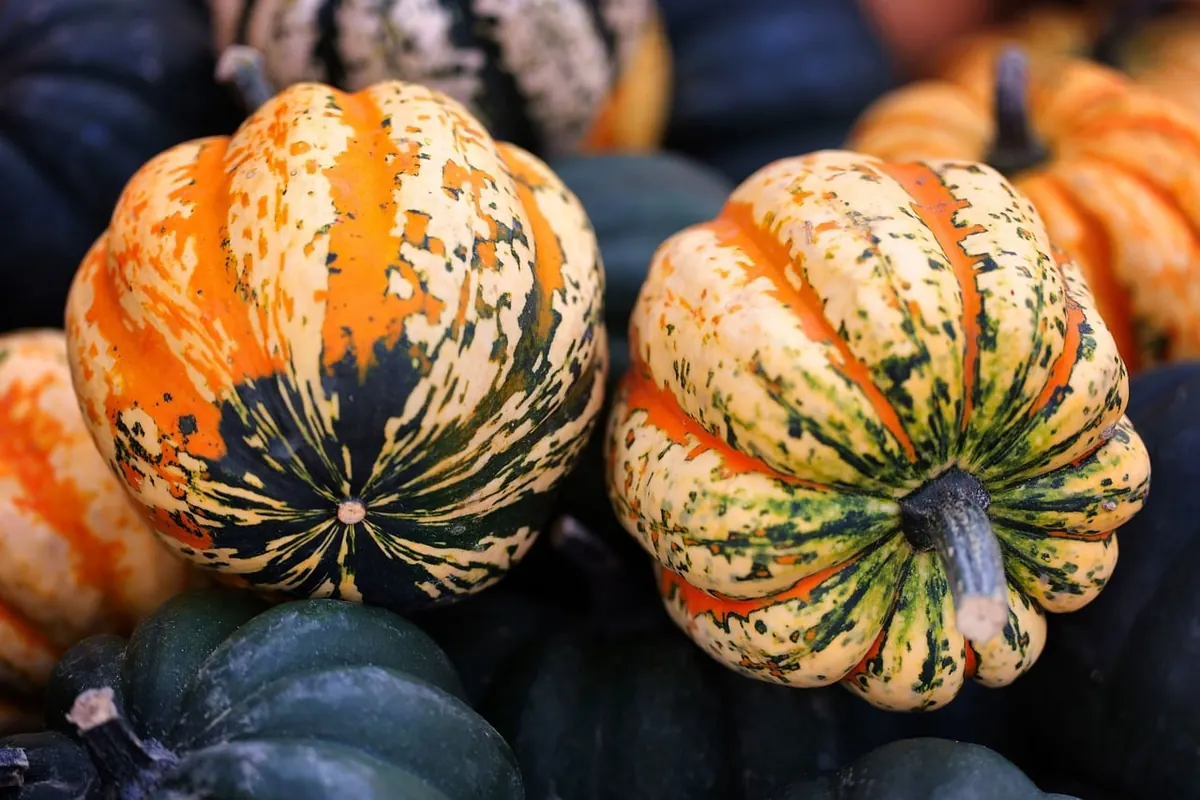
Quince, medlars and cobnuts follow, then squash and pumpkins, which need a week somewhere warm and dry to cure before storage. Sloes are ready after the first frost and destined for gin. Quince jelly uses the peel and cores; the fruit itself becomes membrillo.
December is citrus month — Seville oranges arrive and clementines are plentiful — and it is also the sensible time to audit the pantry. Bring older jars to the front, bin anything spoiled, and note what you actually used this year.
Keeping It Going Through the Year
A seasonal pantry runs on unglamorous habits rather than any single recipe.
- Keep stores cool, dark, dry and well away from the boiler.
- Store onions and potatoes separately; each spoils the other.
- Label everything with contents and date, and rotate older jars to the front.
- Buy small amounts until you know you will use them.
- Preserve in short sessions across the year rather than one exhausting weekend.
If you plan to give preserves as gifts or sell them, follow tested recipes and current food safety guidance rather
Photo: fietzfotos / Pixabay
Freezer-to-Pantry Meal Prep: 8 Make-Ahead Dinners for Busy Weeks
Eight make-ahead dinners that pair freezer portions with pantry staples — from slow-cooked ragù to lentil...
7 Common Pantry Cooking Mistakes (and How to Fix Them)
Seven small pantry habits that flatten flavour or waste food — late seasoning, careless swaps, poor...
About Us