First In, First Out: A Pantry Food-Waste Checklist for Busy Households
There is a particular kind of guilt that comes with clearing out a cupboard: the tin at the back that expired last spring, the bag of rice bought "just in case", the jar of preserved lemons you never opened. Most of us do not waste food on purpose. We waste it because the newest items go in front, and the older ones quietly slide out of sight.
First in, first out is the fix, and it takes about five minutes a week. Here is how to set it up in a normal kitchen, no spreadsheets required.
Why Pantry Food Gets Forgotten
Pantry waste rarely happens in one dramatic moment of overbuying. It builds up quietly. You come home with a bag of lentils and push it in front of the older bag. You reach for the tin at eye level because it is easier. Two jars of cumin live on the same shelf and neither gets finished.
Add a busy week, a takeaway, a change of plan, and the items at the back of the shelf simply stop existing. By the time you find them, the best before date is a memory.
The goal isn't a perfectly tidy cupboard. It's being able to see what you have, and knowing what to use next.
What First In, First Out Actually Means at Home
Commercial kitchens have used this system for years: new stock goes behind old stock, so the oldest gets used first. You can run the same rule on a single shelf.
In practice it comes down to three habits:
- When you unpack the shopping, take the older items out and put them at the front.
- Put the new ones behind them, not on top.
- Keep only one open packet or jar of the same ingredient at a time, unless you use it quickly.
Date labels deserve a moment here, because they mean different things. A use by date is about safety, and food should not be eaten after it. A best before date is about quality, so a slightly older packet of pasta or tin of beans may still be perfectly good — check it, smell it, cook it thoroughly, and use your judgement.
Storage matters as much as dates. A cool, dark, dry cupboard keeps most dry goods in good condition far longer than a shelf above the oven or the radiator.
If you are ever genuinely unsure whether something is safe to eat, throw it out and check official food safety guidance rather than guessing. No jar of sauce is worth a stomach upset.
Set Up Three Zones in Each Cupboard
You don't need a labelling machine or an elaborate system. Splitting each shelf into three loose zones is enough.
Front row: eat first
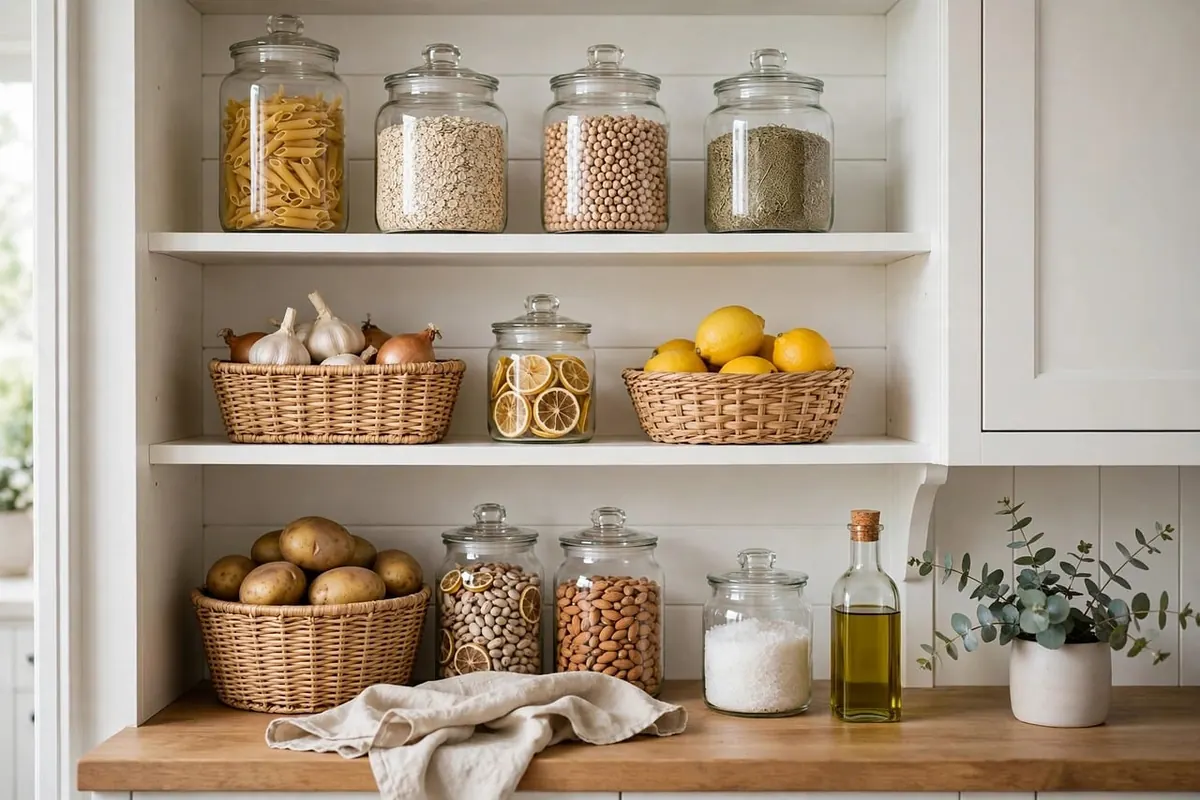
This is your "use me" zone, at eye level. Anything opened, anything close to its date, and anything you know you'll forget. If you decant flour, rice or cereal into jars, keep the opened ones here.
Middle: this month or so
Sealed duplicates and staples you'll get through in the next few weeks. When something leaves the front row, promote the next oldest item forward.
Back: reserves
Long-life tins, unopened bags and backup items. The back is not a graveyard — it's a queue. Every time you shop, the queue moves forward.
The Five-Minute Weekly Check
Rotation only works if it happens regularly, and the trick is tying it to something you already do: bin day, the weekly shop, or Sunday evening while the kettle boils. Set a timer and do one shelf, not the whole cupboard.
- Pull out the front row of one shelf.
- Move anything with an earlier date to the front, or into a "use me" box on the counter.
- Check for duplicates: two open jars of the same thing, two bags of the same pasta shape.
- Wipe the shelf, then put everything back in date order, oldest first.
- Add anything you're short of to the shopping list — but only what you'll realistically use.
That's it. Over a month, five minutes a week reaches every shelf in the kitchen.
The oldest item goes first. Everything else follows.
The Monthly Deep Sweep
Once a month, spend fifteen minutes on one cupboard and look at the things that go stale quietly: flour, spices, oils, nuts, seeds, dried fruit, brown rice. These rarely look wrong from the outside.
What to check:
- Spices: ground spices fade faster than whole ones. If a jar smells of dust, it won't add much to a dish.
- Oils and nuts: rancid oils smell slightly like old paint or crayons. Bin them.
- Flour and grains: look for clumping, webbing or tiny insects. Airtight containers help, and freezing a new bag for a couple of days can head off pantry moths.
- Baking powder and dried yeast: if you bake rarely, replace them rather than risking a flat cake.
Write the date on anything you decant. A jar of porridge oats with no date on it tells you nothing.
Your Pantry Food-Waste Checklist
Keep this somewhere visible for the first month or two.
- New items go behind old ones, every time you unpack the shopping.
- Only one open packet or jar of the same ingredient at once.
- An "eat me" box sits at eye level, not at the back.
- Every decanted jar is labelled with contents and date.
- One meal a week is built around the oldest item in the pantry.
- Front rows get a date check weekly; deeper shelves monthly.
- Bulk buying is reserved for things you genuinely get through.
- Opened jars and packets are checked for smell and texture before use.
- A running note records what you have two of, so you don't buy a third.
Making It Stick
Don't overhaul the whole kitchen this weekend. Pick one shelf — the one you can't see into properly — and rotate it tonight. Then tie the weekly check to a routine you already have, so it stops being a task and becomes part of putting the shopping away.
Within a few weeks you'll notice fewer duplicates, less binning, and a pantry where the oldest thing is also the easiest to reach. That's the whole system: oldest first, and nothing hiding at the back.

A British Seasonal Pantry Calendar: What to Buy, Store and Cook Month by Month
A month-by-month guide to British seasonal pantry cooking, from Seville orange marmalade in January to...
Freezer-to-Pantry Meal Prep: 8 Make-Ahead Dinners for Busy Weeks
Eight make-ahead dinners that pair freezer portions with pantry staples — from slow-cooked ragù to lentil...
About Us