The 15-Item Pantry Checklist Every British Home Cook Needs
A good pantry isn't a walk-in cupboard groaning with jars. It's a small, deliberate collection of things that work together — the flour that thickens a gravy, the tin of tomatoes that becomes dinner at half six, the oats that turn into breakfast without a trip to the shop. Get fifteen items right and you can cook properly on a wet Tuesday with nothing fresh in the house but an onion and a bit of cheese.
The list below is deliberately short. Everything on it earns its place by doing more than one job, keeping well and being cheap enough to replace without wincing. Store it with a bit of care and most of it will outlast your intentions for it.
The Fifteen at a Glance
- Plain flour — sauces, shortcrust, Yorkshire puddings, roux
- Dried pasta — two shapes: one long, one short
- Rice — long-grain or basmati, plus a little pudding rice if you like
- Porridge oats — breakfast, flapjacks, crumble topping
- Tinned chopped tomatoes — the base of half of everything
- Tinned pulses — chickpeas, butter beans, lentils
- Tinned fish — tuna, sardines, mackerel
- Coconut milk — curries, soups, rice, dhal
- Olive oil — one good bottle for dressing, one everyday for cooking
- Neutral oil — rapeseed or sunflower, for frying and baking
- Vinegar — malt or cider, plus balsamic if you have room
- Soy sauce — stir-fries, marinades, gravy depth
- Stock cubes or pots — the difference between thin and savoury
- Dried herbs and a small spice set — see the starter list below
- Baking powder and bicarbonate of soda — raising agents, and the reason your scones rise
Flours, Grains and the Baking Shelf
Plain flour
Plain flour is the workhorse: it thickens a cheese sauce, makes a shortcrust that behaves, and lifts a sponge when paired with baking powder. As a rough guide, 150g of plain flour with two level teaspoons of baking powder will stand in for self-raising. Keep it in an airtight container rather than the paper bag it came in, which splits, spills and invites damp. Wholemeal and other wholemeals contain more oil in the germ, so they go stale faster — store them in the fridge if you bake only occasionally.
Pasta and rice
Buy one long shape and one short shape and you'll cover both a quick sauce and a baked dish. Rice does more than accompany a curry: it becomes rice pudding, fried rice with leftovers, and a base for stuffed peppers. Both keep for a long time in jars in a cool, dark cupboard. Write the date you opened them on the lid, because "a long time" is not the same as forever.
Oats
Oats are the quiet hero of the shelf. Beyond porridge, they thicken soups, bulk out meatballs, make flapjacks from whatever dried fruit is loitering, and give a crumble its rubble. A clip-top jar keeps them fresh and makes them look like you have your life together.
The Tins Worth Their Shelf Space
Tinned tomatoes are the single most useful thing you can keep. Chopped ones go straight into quick sauces; whole plum tomatoes are better for anything slow-cooked, because you can crush them by hand and get a chunkier result. Read the label occasionally — some brands add sugar and salt, which is fine, but it's worth knowing.
Pulses are protein, bulk and texture in one tin. Chickpeas become houmous, a tray of crunchy roasted snacks, or a curry that feeds four for very little. Butter beans and cannellini beans mash into a thick, creamy base for stews. Lentils thicken a soup better than flour does.
Tinned fish is the fastest dinner on the shelf: sardines on toast, tuna folded through pasta with lemon and chilli, mackerel flaked into a potato salad. Coconut milk turns any of the above into something else entirely. Shake the tin before opening if it's separated, and decant leftovers out of the tin into a small bowl before refrigerating.
Oils, Vinegars, Sauces and Stock
Olive oil is worth splitting into two jobs. Keep a good, peppery one for dressing and finishing, and a cheaper one for roasting and frying. Heat and light are its enemies, so it belongs in a cool cupboard, not in a pretty bottle on the windowsill above the hob. If your oil smells like old putty, it has turned and will make everything taste of it.
Vinegar is the ingredient people forget until a dish tastes flat. A splash of malt over chips, cider vinegar in a dressing, balsamic roasted with tomatoes or onions — all of them sharpen a plate that's too rich or too sweet.
Soy sauce adds savoury depth to far more than stir-fries: a teaspoon in a gravy, a marinade or a tray of roasted vegetables does a lot of quiet work. Buy it in small bottles, as the flavour fades once it's open.
Stock cubes and pots are the shortcut worth taking. Crumbled into a pan of onions, they turn water into something worth eating. If you roast a chicken, simmer the carcass with an onion, a carrot and a bay leaf, then freeze the result in ice cube trays — free stock, and it's better than anything from a cube.
Herbs, Spices and Aromatics
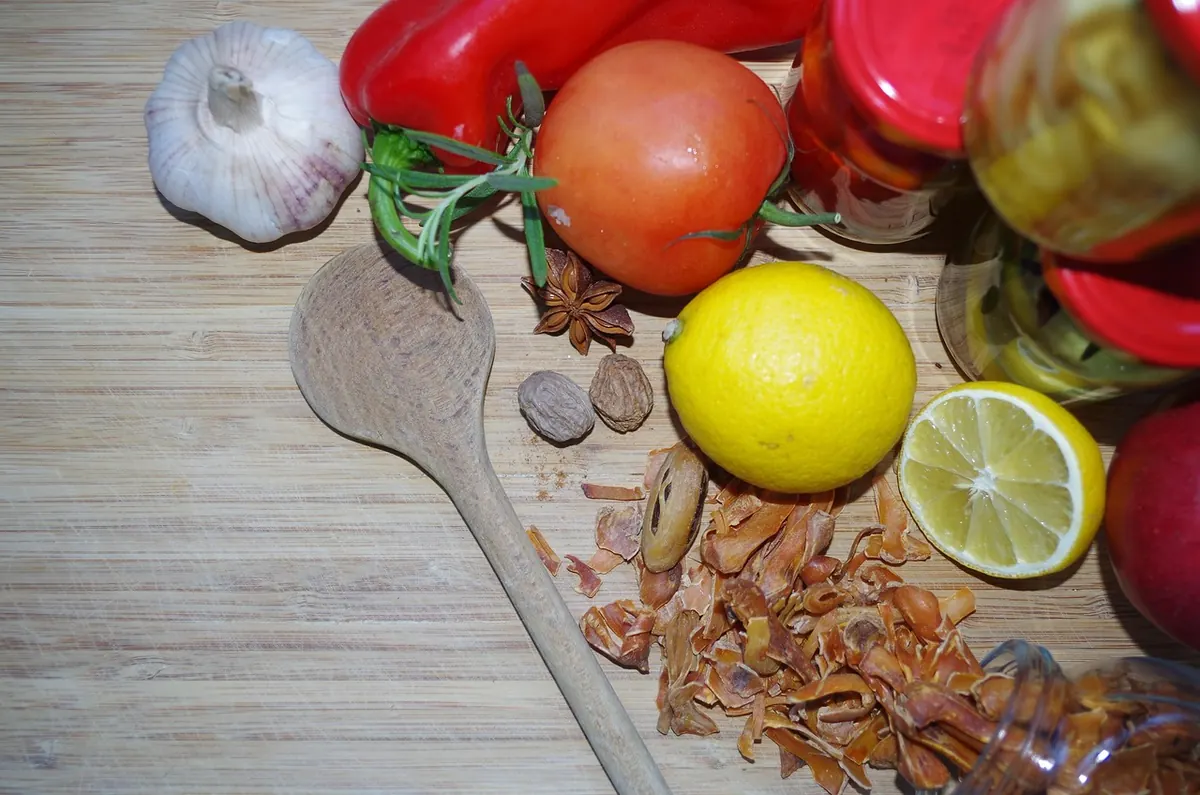
You don't need a rack of forty jars. A starter set of bay leaves, dried oregano, thyme, chilli flakes, black peppercorns, cumin, ground coriander, paprika, turmeric, cinnamon and a curry powder or garam masala will cover most of what British home cooking asks for. Buy whole spices where you can — they hold their flavour far longer than ground — and toast them in a dry pan before grinding.
Dried herbs and spices don't spoil so much as fade. Give a jar a sniff: if it smells of dust, it's dust. Keep them away from the steam and heat of the hob, and label everything with the date you opened it.
Onions and garlic deserve a mention here, even though they're fresh. A bowl of both, kept cool, dark and well ventilated, means there's almost always the beginning of a meal in the kitchen. Keep them away from potatoes, which release moisture and send onions soft.
Storing It All Properly
- Decant into glass jars or airtight containers. Old jam jars, clip-tops and decent plastic tubs all work. Clear containers mean you can see what's running low before you're mid-recipe.
- Label as you go. Item, date opened, and any cooking note worth remembering. Masking tape and a marker do the job.
- Keep the cupboard cool, dry and dark. Not above the oven, not beside the radiator, not under a leaking sink.
- Rotate. New things go to the back, older things to the front. A shallow basket of "use first" items stops things disappearing into the depths.
- Follow the pack. Tinned and dried goods have their own guidance on storage and use-by dates, and it's worth reading rather than assuming. If in doubt, follow the pack and the Food Standards Agency's advice.
Larger quantities are cheaper, but only if you'll use them before they fade. Buy flour, spices and oil in sizes you'll realistically get through, and save the bulk buying for rice, pasta and tins.
Building the Shelf Slowly
Nobody needs to buy fifteen items in one shop. Add one or two to each weekly shop, replacing what you've used rather than what looks nice on the shelf, and within a couple of months you'll have a pantry that quietly feeds you. Keep a note on the inside of a cupboard door of what runs out, so you're not guessing in the aisle.
The real test of a good pantry is a Tuesday night with an empty fridge. If you can open the cupboard and see dinner — pasta, a tin of tomatoes, a clove of garlic, a pinch of chilli — then the checklist has done its job.
Photo: JESHOOTS-com / Pixabay
A British Seasonal Pantry Calendar: What to Buy, Store and Cook Month by Month
A month-by-month guide to British seasonal pantry cooking, from Seville orange marmalade in January to...
Freezer-to-Pantry Meal Prep: 8 Make-Ahead Dinners for Busy Weeks
Eight make-ahead dinners that pair freezer portions with pantry staples — from slow-cooked ragù to lentil...
About Us